"Moon Trees": A Symbol of Space Exploration
Discover the fascinating story of "Moon Trees," seeds that orbited the Moon and grew into symbols of space exploration and scientific collaboration.
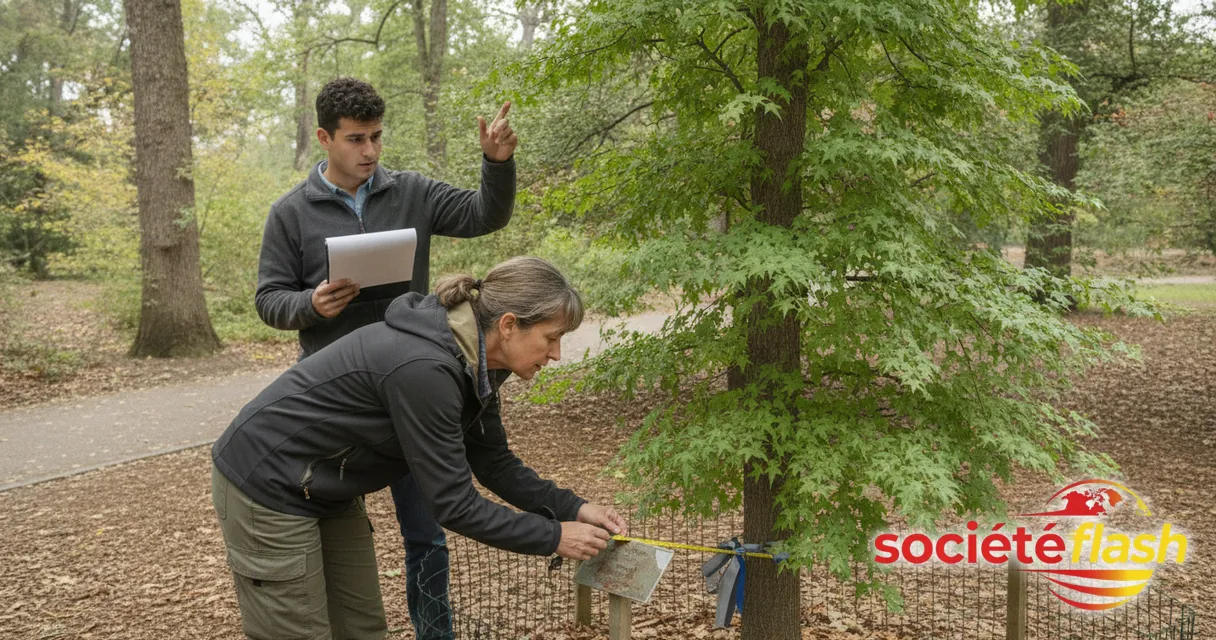
"Moon Trees" stand as a remarkable testament to the intersection of space exploration and terrestrial biology. These unique trees began their journey as seeds that traveled around the Moon and now symbolize human ingenuity and the legacy of the Apollo program. For those intrigued by the story of the Moon Trees, this article delves into their history, impact, and how they continue to inspire generations.
An Ambitious Project: The Moon Trees
In 1971, during the Apollo 14 mission, astronaut Stuart Roosa carried hundreds of tree seeds on a mission around the Moon. This initiative, a collaboration between NASA and the United States Forest Service, included seeds from loblolly pines, sycamores, sweetgums, sequoias, and Douglas firs. The project aimed to study the effects of space travel on seeds. According to NASA, these trees were planted across the United States and globally, becoming enduring symbols of space exploration.
Challenges and Successes in Germination
Upon returning to Earth, the seeds faced significant challenges during decontamination procedures. However, thanks to the efforts of the Forest Service, many seeds successfully germinated. The resulting seedlings were planted in various locations, often as part of the United States Bicentennial celebrations in 1976.
The Scientific Impact of Moon Trees
Moon Trees provided scientists with a unique opportunity to study the effects of space travel on living organisms. While no significant differences were observed between Moon Trees and their Earth-bound counterparts, these trees continue to spark interest in both space and biological research. They serve as a reminder of how interconnected space exploration and biological science can be, offering continuing inspiration for future research initiatives.
A Lasting Legacy
More than just a scientific project, these trees embody the spirit of innovation and discovery that defines space exploration. They also emphasize the importance of international cooperation, having been planted in countries such as Brazil, Switzerland, and Japan. The global distribution of these trees illustrates a shared human curiosity and the collective achievements of international collaboration in science.
Where to Find Moon Trees Today
Though a complete list of Moon Trees is not available, several are known to be planted in iconic locations. For instance, a loblolly pine is located at the White House, and sycamores can be found at universities and botanical gardens across the United States. These locations not only highlight the historical significance of the Moon Trees but also make them accessible to the public.
- Birmingham Botanical Gardens, Alabama - Sycamore
- University of Arizona, Tucson - Sycamore
- Humboldt State University, Arcata, California - Sequoias
- Capitol Park, Sacramento, California - Sequoia
These trees serve as both local attractions and symbols of scientific history, offering visitors a tangible connection to the history of space exploration.
FAQ
What are Moon Trees?
Moon Trees are trees that were grown from seeds that traveled around the Moon during the Apollo 14 mission. They represent a collaboration between NASA and the United States Forest Service.
Where can you see Moon Trees?
They are planted in various locations across the United States, including the White House, universities, and public parks. Some were also given to other countries.
Why were Moon Trees created?
The project aimed to study the effects of space travel on seeds and to create a living symbol of space exploration.
What types of trees were used for Moon Trees?
The types include loblolly pine, sycamore, sweetgum, sequoia, and Douglas fir.
What is Stuart Roosa's legacy in this project?
Stuart Roosa, astronaut of Apollo 14, carried the seeds around the Moon. His commitment to science and exploration lives on through these trees.
Conclusion: A Living Tribute to Space Exploration
The Moon Trees are a living tribute to the legacy of space exploration and Stuart Roosa. To learn more about space-related initiatives and other fascinating topics, explore the articles on Société Flash, your trusted news portal. For questions or suggestions, feel free to contact us.
Also Read