Exploring the Legacy of the Standard Diving Suit
Discover the history and impact of the standard diving suit, its evolution, and how it shaped the underwater exploration industry.
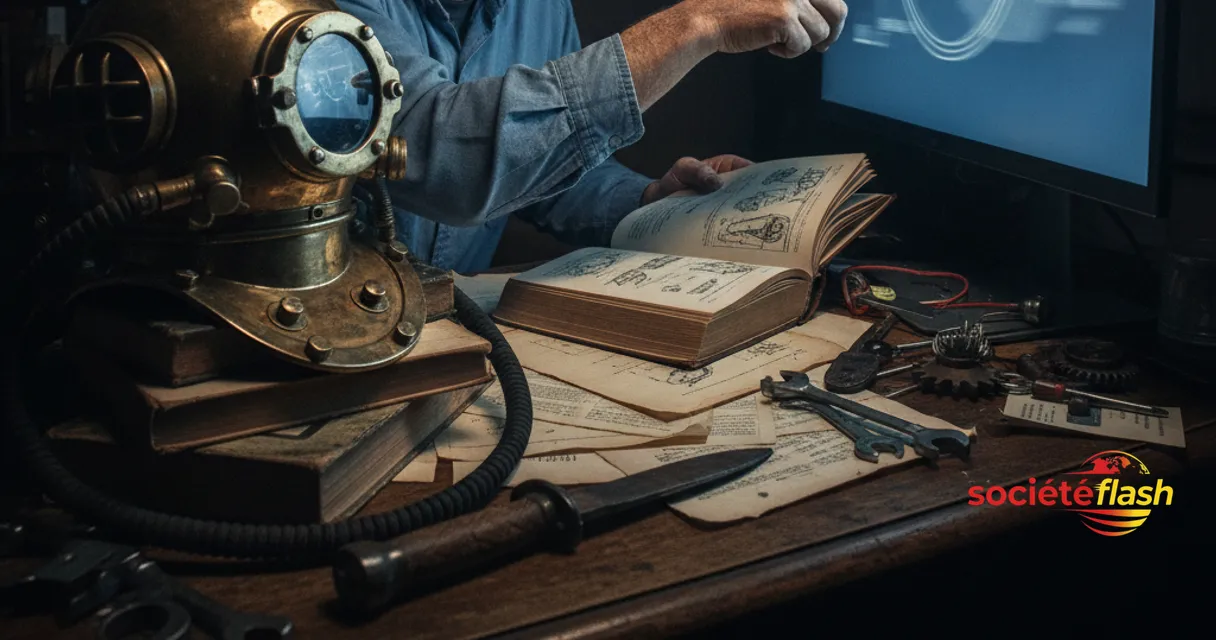
The allure of underwater exploration has captivated humans for centuries, and the development of the standard diving suit marked a significant milestone in this journey. This robust equipment played an essential role in underwater tasks beyond the limits of breath-hold diving. Today, we invite you to explore the history and impact of the standard diving suit to appreciate its evolution and contribution to the industry.
The Challenges of Early Diving Methods
Before the advent of the standard diving suit, underwater exploration was severely limited by divers' lung capacities. This restriction drastically curtailed the duration and depth of dives, making complex tasks such as maritime rescue or civil engineering underwater almost unfeasible. Early attempts at effective diving suits date back to the early 15th century, featuring rudimentary designs that offered minimal protection and functionality.
The Evolution of the Standard Diving Suit
A breakthrough in diving technology emerged in the 1820s, thanks to the innovations of Charles and John Deane. Inspired by a fire accident, they developed a diving helmet that was subsequently adapted for underwater work. Paired with a watertight suit, this helmet allowed divers to remain submerged for extended periods safely. Further advancements included the invention of a regulator by Rouquayrol and Denayrouze in the 1860s, which optimized the use of surface-supplied air, crucial for deeper dives requiring controlled breathing.
The Path to Obsolescence
Despite its success, the standard diving suit was gradually replaced by lighter and more comfortable equipment. The increasing demand for mobility and efficiency led to the adoption of modern technologies like autonomous diving suits, which offer greater freedom of movement and more precise buoyancy control. Advances in materials and technology have resulted in safer and more efficient diving equipment, rendering the old model obsolete for many commercial and military applications.
Modern Solutions for Divers
For those interested in professional or recreational diving, staying informed about the latest innovations in diving gear is crucial. Société Flash is dedicated to providing detailed, up-to-date information on the latest trends in diving, ensuring that divers can make informed choices.
- Tracking technological innovations in diving equipment.
- Guidance on selecting the right gear for specific needs.
- News on diving research and development.
Visit our News section to stay updated on the latest advancements.
Conclusion
The standard diving suit has left a lasting legacy in the history of underwater exploration. Although it has been superseded by more modern equipment, understanding its role and evolution is essential to appreciate the progress made in this field. To learn more about the history and innovations in diving, explore Société Flash and feel free to contact us for any questions or further information.
FAQ
What is the standard diving suit?
It is a type of rigid diving suit historically used for underwater tasks requiring prolonged submersion.
Why was it replaced by other equipment?
It was replaced due to its weight and lack of comfort, as modern divers prefer lighter equipment that offers better mobility.
What are the advantages of modern diving equipment compared to the old model?
Modern equipment is lighter, provides better buoyancy control, and allows for greater freedom of movement underwater.
Also Read