Why Canada Destroys Retired RCMP Police Cars
Discover why retired RCMP police cars in Canada go to the crusher, exploring the policy's reasons and financial impact.
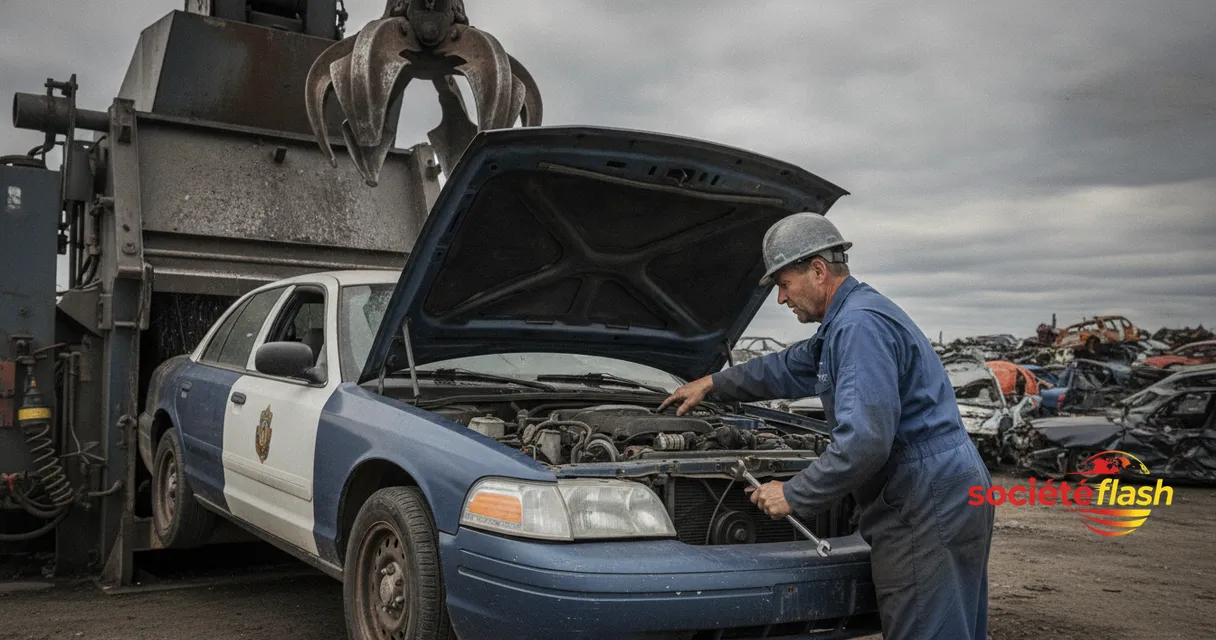
In a decision that has stirred considerable debate, retired Royal Canadian Mounted Police (RCMP) vehicles are being sent to the crusher instead of being sold, as per Canadian regulations. This controversial move has attracted criticism from taxpayers who see it as a waste of valuable resources. In this article, we explore the reasons behind this policy, its financial implications, and how Société Flash can keep you informed on crucial issues like this.
Why Are Retired Police Cars Destroyed?
The policy to destroy retired RCMP vehicles rather than sell them was implemented following a tragic event in 2020 in Nova Scotia. A 51-year-old man used a decommissioned and modified Ford Taurus police car to impersonate a police officer and commit a mass shooting, resulting in the deaths of 22 people. This incident prompted then-Minister of Public Safety, Bill Blair, to halt the sale of these vehicles to prevent their potential misuse in criminal activities.
Financial Impact of Vehicle Destruction
The RCMP maintains one of the largest police vehicle fleets in North America, with around 12,000 vehicles. Annually, about 1,600 vehicles are retired. Before the ban, auctions of these vehicles generated between 6 to 8 million dollars per year. However, due to the moratorium, all these vehicles are now destroyed, leading to a significant financial loss for the government.
Moreover, managing these retired vehicles incurs over a million dollars in storage costs annually. This raises questions among taxpayers and policymakers who believe these resources could be more effectively utilized.
Storage Costs
Before destruction, the retired vehicles need to be stored, creating logistical and financial challenges. The RCMP has stated that this situation affects daily fleet operations and delays the replacement of essential police vehicles.
Exploring Alternatives for Retired Vehicles
As the moratorium continues, discussions are underway to find viable alternatives to vehicle destruction. The current Minister of Public Safety, David McGuinty, has suggested the possibility of lifting the ban for off-road vehicles, but police cars, SUVs, and trucks are still being sent to the crusher. This has led some to question whether more effective measures could be implemented to prevent the waste of resources.
- Sale of low-mileage engines
- Reallocation of vehicles to other public services
- Controlled sale of unmarked vehicles
Reevaluating Current Policies
The ongoing destruction of vehicles in good condition raises concerns about the management of public resources. It may be time to reconsider current policies and explore new approaches to maximize the use of existing assets.
How Société Flash Can Help
At Société Flash, we are committed to providing accurate and up-to-date information on important topics like this one. Our team of experienced journalists covers a wide range of current affairs, ensuring you stay informed about major developments in Canada and around the world.
We invite you to explore our other articles, such as the analysis on Trump's statement about Canada or the consideration of tariffs by the Trump administration, for a broader perspective on current political issues.
FAQ
Why doesn't Canada sell retired police cars?
The government stopped selling these vehicles after a tragic incident where a man used a retired police car to commit a mass shooting in Nova Scotia. This measure aims to prevent the impersonation of law enforcement officers.
How many vehicles does the RCMP retire annually?
The RCMP retires approximately 1,600 vehicles each year. These were once sold at auction, but a moratorium now mandates their destruction.
What is the financial impact of this policy?
The destruction of these vehicles leads to a loss of 6 to 8 million dollars in annual revenue and incurs more than a million dollars in storage costs each year. This has drawn criticism over the waste of public resources.
Conclusion
The policy of destroying retired police cars in Canada sparks significant debate about public resource management and safety. To stay informed and understand the implications of such decisions, contact Société Flash for in-depth analyses and up-to-date news. We encourage you to explore our site for more relevant information on current events.
Also Read