EU Expands Taxes on Chinese Imports
The EU extends its parcel taxes to all imports from China, aiming to protect local markets and improve customs control.
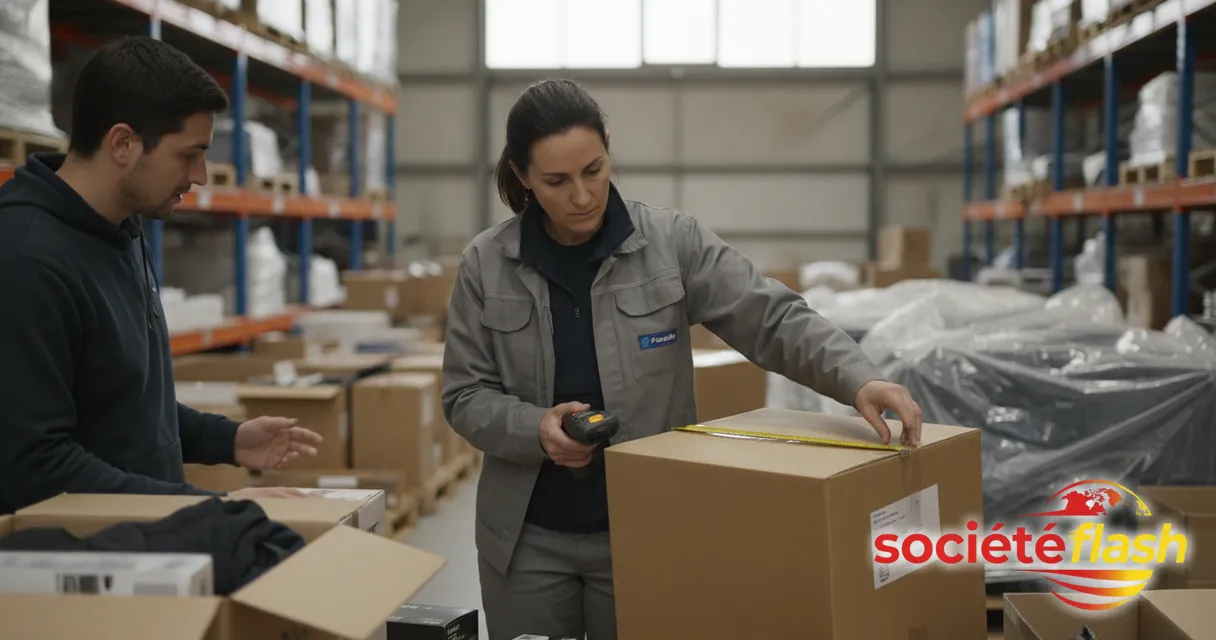
The European Union has recently stepped up its efforts to curb the influx of imported products, especially those coming from China. According to Challenges, following the imposition of a tax on small parcels, the EU has now extended this tax to all imported parcels, marking a significant shift in its trade strategy.
Why Has the European Union Implemented These New Taxes?
The EU's decision to impose a two-euro tax on imported parcels aims to control the massive flow of products from China. In 2025, about 5.9 billion small parcels were imported into the EU, with 93% originating from China. This surge has not only increased the EU's trade deficit but also complicated merchandise control, allowing dangerous and counterfeit products to enter the market.
European retailers feel threatened by what they perceive as unfair competition. The goal of these new taxes is to finance the enhancement of customs controls and protect the European economy. By increasing customs checks, the EU hopes to mitigate the impact of low-cost imported goods on the local market.
How Does the New Taxation Work?
The two-euro tax now applies to each category of products within an imported parcel. For instance, a parcel containing caps, t-shirts, and trousers will incur a total tax of six euros, two euros per product category. This is in addition to the three-euro tax on small parcels, those valued under 150 euros, implemented since July 2026. These combined taxes will remain in place until July 2028.
The aim is to make these imports less attractive to European consumers by increasing their overall cost. Online sales platforms, such as AliExpress and Shein, might pass these costs onto consumers, making cross-border shopping less competitive.
What Are the Initial Results of This Policy?
Since the introduction of the small parcel tax in July, there has already been a 64% decrease in the flow of these parcels. In France, a 48% drop in small parcels was observed between June and August 2026. These results are promising, though European authorities note that it is still too early to draw definitive conclusions.
Additionally, there has been a noticeable decline in traffic to platforms like AliExpress, Temu, and Shein in France, with respective decreases of 10%, 36%, and 42% in July. This trend suggests that European consumers may start favoring local purchases or platforms without the same customs restrictions.
Impact on Consumers and Businesses
For European consumers, these new taxes likely mean increased prices for imported goods. Online sales companies may be forced to raise their prices to offset the new taxes. However, this situation could also encourage consumers to purchase more locally, benefiting European businesses.
European companies, particularly in the retail sector, might see an opportunity to regain market share lost to Asian platforms. This could also motivate European businesses to enhance their competitiveness by improving their product offerings and services.
FAQ
What are the main reasons for these new taxes?
The new taxes aim to reduce the massive flow of products imported from China, protect the European industry from unfair competition, and fund better customs control.
How will European consumers be affected?
Consumers might face higher prices for imported goods, potentially leading them to turn to local products.
When will these measures be fully implemented?
The two-euro tax has been in effect since November 1, 2026, and the current measures will remain applicable until July 2028.
What is the impact on online sales platforms?
Platforms like AliExpress and Shein have already seen a decline in traffic and may experience reduced sales in Europe.
How do these taxes influence customs controls?
The revenue generated by these taxes will be used to strengthen customs controls, allowing for better management of imported goods flow.
Conclusion
As the European Union tightens its measures to control imports, it is crucial for businesses to adapt to this new commercial landscape. At Société Flash, we understand the complexity of these regulatory changes and are committed to providing you with accurate and up-to-date information. To stay informed and understand how these changes may affect your business, feel free to contact us today.
Also Read



The Challenge of Reusable Catering Packaging in the Hospitality Sector
By La rédaction de Société Flash